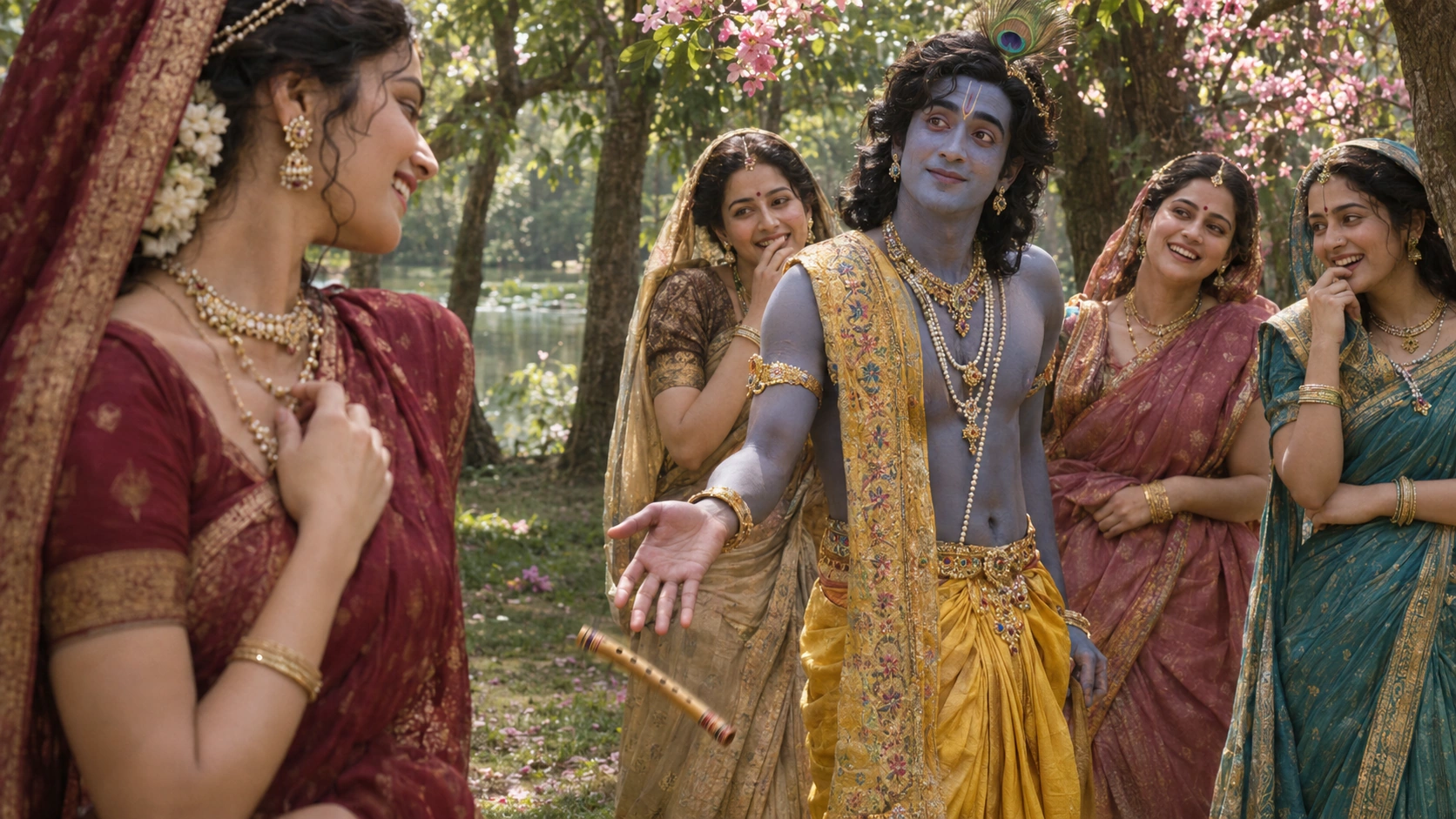
As Krishna walked through Vrindavan, he reached the woodland of early winter. He left the path shaded by thick treetops. Earlier it had sheltered him from the heat, but now the cold led him elsewhere. The poet imagines the very path wilting once it was parted from Krishna.
The young women of Vraja drew themselves into their garments, their knees pressed close. The cold stopped them in their tracks and made their breath unsteady. In the way they held themselves, the poet sees something of the astonishment of a sudden meeting with Krishna.
Krishna told Radha that the moon now received a greater share of each day and night. The daylight shortened, and the sun’s rays lost strength. She trembled before him like lightning. He asked what the frost would do to her as the cold grew keener.
Then he called her into the house of his heart, warmed by his longing for her. He drew her to his chest with both arms despite her protest. As they moved, his sash loosened. The flute slipped from it to the ground, as though angry at being neglected.
Lalita lifted the flute and addressed it like a living companion. She called it hard and cold. It carried a melodious song, she told it, yet it also knew how to disturb everyone. Then she fastened it to the end of her braid and hid it. Absorbed in being close to Radha, Krishna did not think of it for a long while.