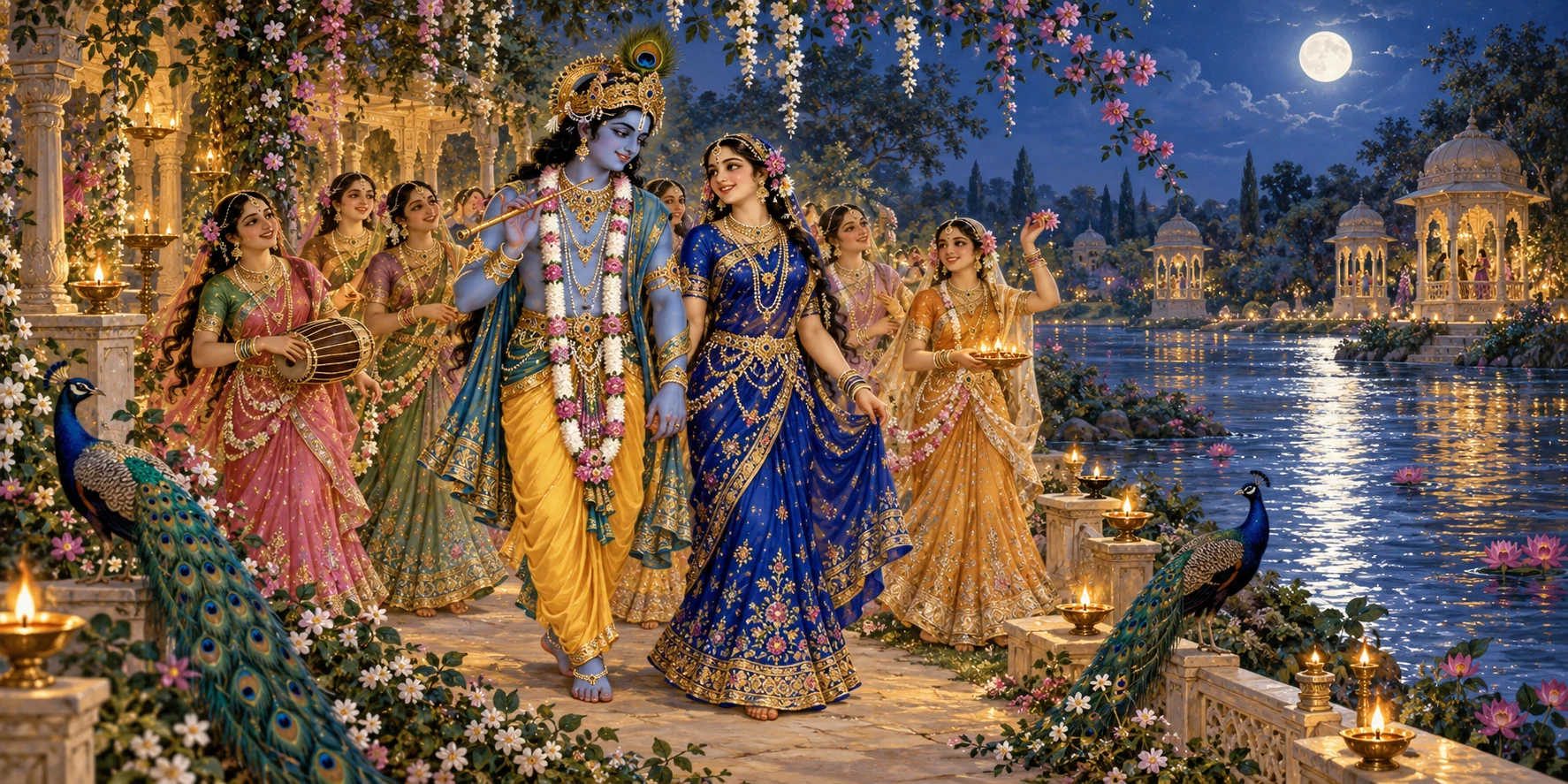
When Krishna glanced toward the terraces, the gopis shyly drew cloth over their faces. At the same moment, the lotuses in the pond folded their petals. The poet wonders whether the flowers drew back when they saw the gopis. The Sanskrit word padmini can refer to a lotus or a beautiful woman, so the proud flowers seem to be competing with the young women for the same name.
In one place the chakora birds rejoiced at the moonrise. In another, the chakravakas mourned the fading day. The bees received equally different news. The night lilies opened their cups and set some bees free, while the dark lotuses closed around those still inside.
Lamps lit the houses, and the darkness seemed to move out into the woods. The scent of night-blooming flowers went the other way and entered the houses. The longing of love slipped into the gopis’ hearts like a snake, quietly finding its way and wearing away their composure and modesty.
The poet imagines dusk as the moment when day and night are still deciding who rules. During that brief reign of dusk in Vraja, even the thought of family customs began to fade. Before long, dusk gave way to night. The poet asks how long the power of darkness can last at all.