Paurnamasi answered that the girls would not bear the reputation Vrinda feared. Some sages would call Krishna their husband. Others would call the gopis His wives. She also recalled the time Krishna sent Uddhava to Vraja, when He spoke of the gopis as wholly devoted to Him. Paurnamasi saw in those words a difference between the outward appearance and what the gopis experienced within. The storyteller connects this thought with the readings of the name Gopijana-vallabha and the last reading in the Gautamiya Tantra, in which the son of Nanda belongs to the gopis as their husband.
He then turns to the Brahma Samhita. Brahma bows to Govinda, who lives in Goloka with companions who belong to His own spiritual nature. Jiva considers the same bond in other verses, in Lalita Madhava, in Ujjvala Nilamani and in the commentary on the rasa story. He compares the eternal bond to that of Lakshmi and Narayana. He also recalls Uddhava, who wished to follow the gopis in their devotion and saw their intimacy with Krishna as a gift seldom attained.
Vrinda was glad, but asked why Paurnamasi had chosen such a sorrowful appearance. Paurnamasi compared the course of the pastime to the episode of Sita staying in Ravana’s home. The arrangement, She said, brings out a particular flavor of feeling. When something seems to separate them for a time, longing grows. The joy of meeting again then becomes keener. Jiva cites verses that connect this with Krishna’s divine pastime. In them the gopis remain His eternal beloveds, while their seeming distance belongs to the manifested pastime.
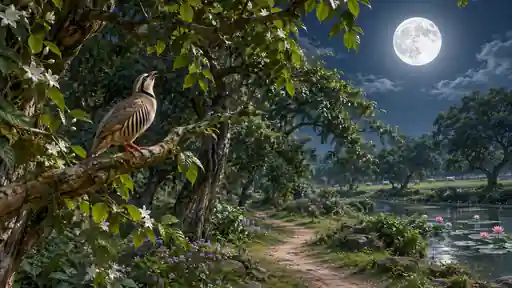
Paurnamasi confided that this was a secret to keep even from the sky. For Radha and Her friends, the son of Nanda is their one beloved. What, She asked, would sustain the cakora bird if it were separated from the moon? Vrinda bowed and asked Paurnamasi to act for their future happiness as well. As she left, Paurnamasi answered in a playful verse, using tense after tense of the verb to affirm that this was indeed what She wished to say.