Krishna rose of His own accord after a short rest. The sound of His beautiful flute arose. The poet likens that sound to a messenger. Its call drew Radha toward Him. She set out swiftly, following it.
She followed the very path from which the flute-song had reached Her. The poet describes Her longing as a companion urging Her onward. Vrinda knew that Radha’s arrival was near. She also knew that the time for the nighttime pastimes had come. As the divine guardian of the gardens, she came to help Them.
Krishna entered the heart of the garden. Moonlight made the place seem cleansed by the moon’s own rays. He sat on a jeweled platform near the bower. He saw His beloved approaching with Her companions. He sent Vrinda to meet Them and bring Them in.
Vrinda went out quickly and met Radha at the gate. Joyfully, she brought Her into the garden of flowering creepers. In the poet’s description, Radha and the garden enhanced each other’s radiance. Seeing Krishna before Her, Radha felt Her distress subside. She seemed to recover an awareness that had been absorbed in Him.
She wondered where She was and how She had come there. Who had brought Her, and by which path? The poet describes the sight of Krishna as dispelling the inward turmoil of longing. Radha rejoiced in Krishna, the garden and the moonlit night. In Her happiness, the burning pain She had felt was forgotten.
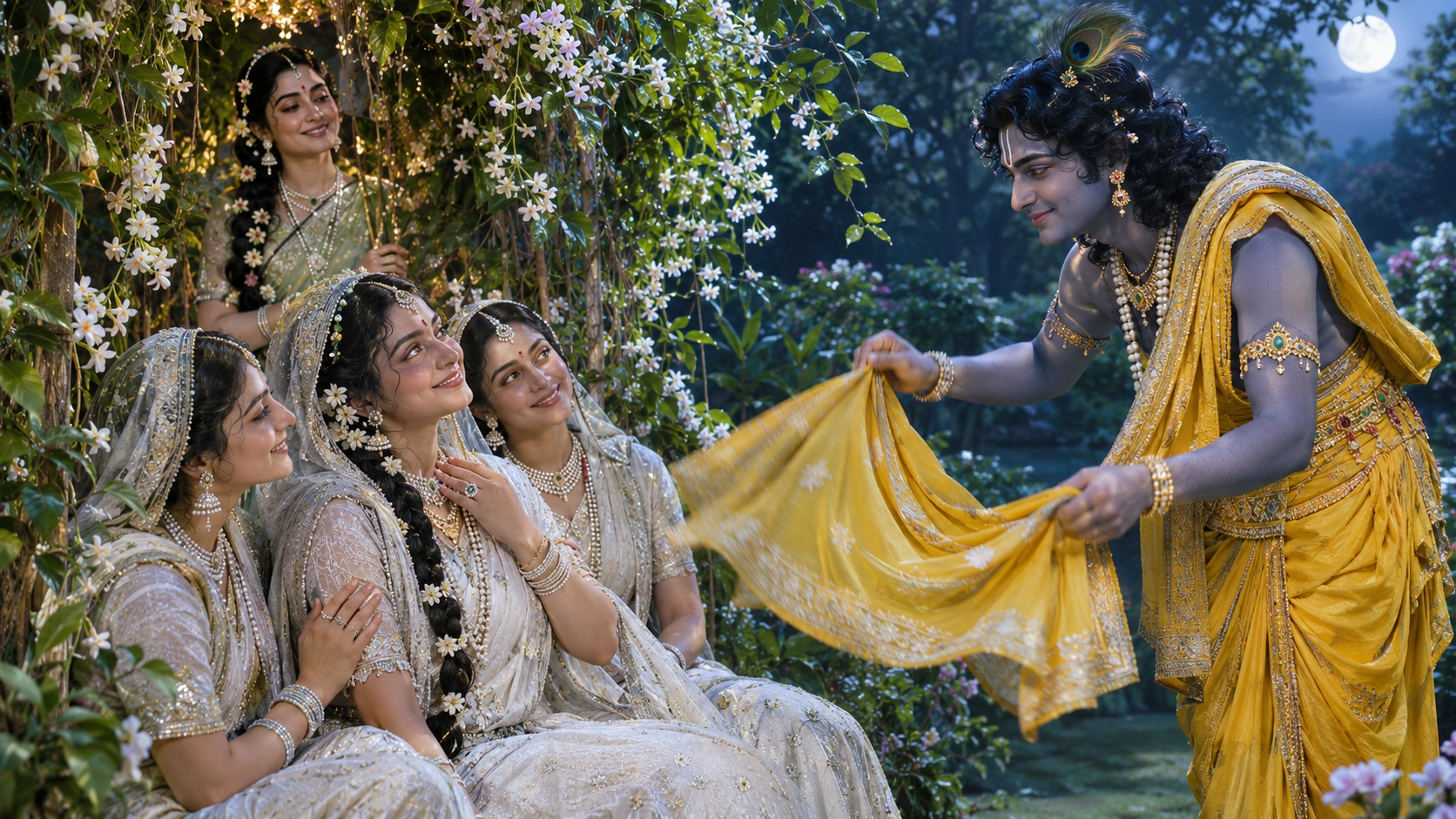
The gopis were weary from the journey. Vrinda placed Them at the entrances of the madhavi bowers. She called upon the creepers to fan Them with tender leaves. The poem presents the creepers as joyful attendants. They fulfilled this service and considered themselves fortunate.
Krishna could not wait for all Their weariness to pass. He came close, His lovely flute in His hand. He turned His own garment into a fan. With it He fanned the gathered gopis. This tender service made Them shy.