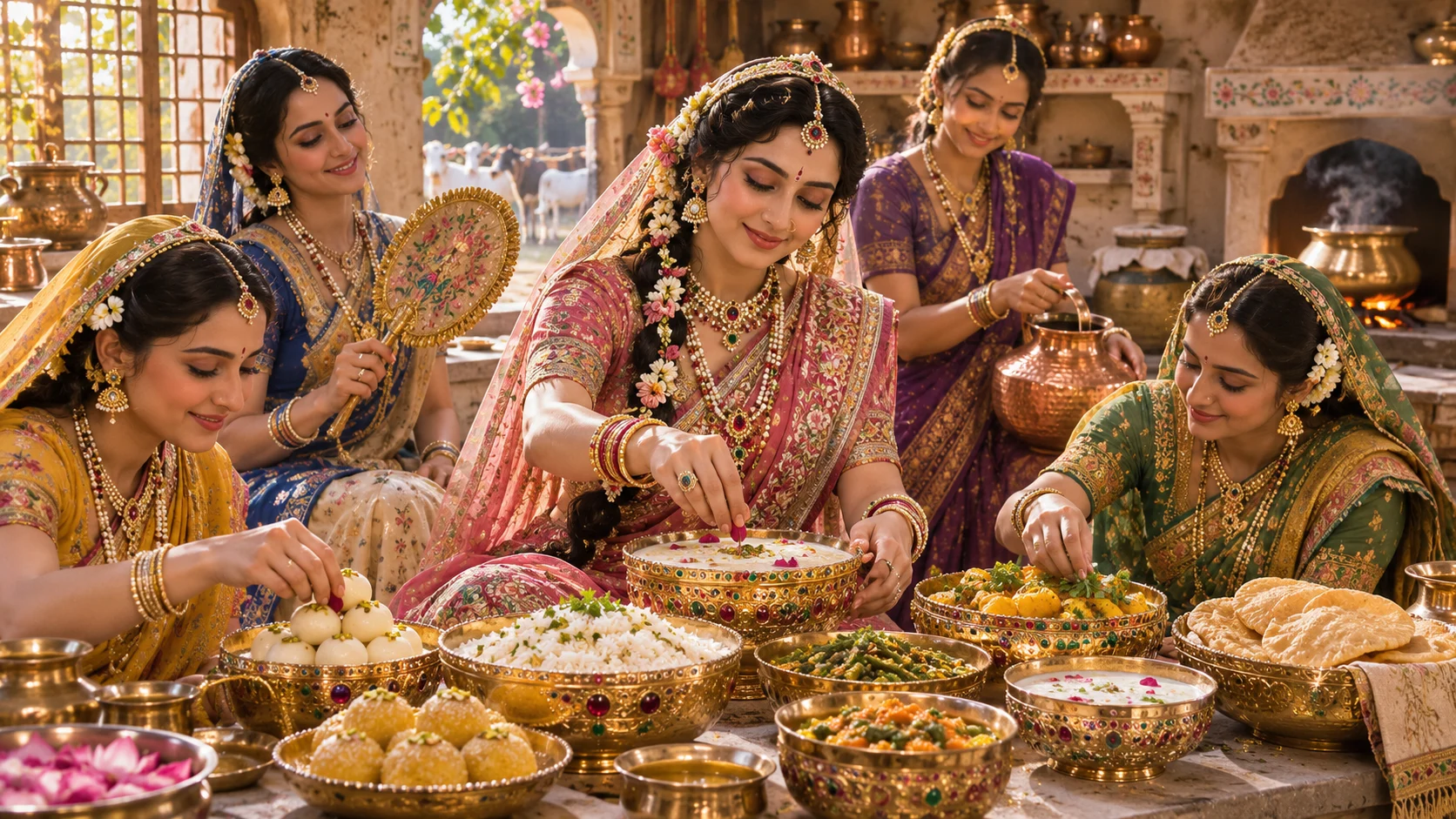
As the vessels heated, several kinds of greens began to cook in pungent oil. They made two dishes from jackfruit seeds. Their seasonings and other ingredients included kasamarda greens, crushed ginger and coconut. For one gourd dish they also prepared radish, taro and other roots. To these they added bitter leaves with kasamarda and freshly crushed ginger in heated oil. Next came eggplant in small pieces with little green-gram morsels. Crushed ginger went into this dish too, and the oil gave it a sharp taste.
For the other vegetable dishes they used eggplant, yam, taro, patola and gourd. They also used tender parts of the banana blossom. They pricked the drier pieces with sharp needles. From them came several kinds of vegetable bhaji. Banana and coconut lent sweetness to another dish, which also had black-gram morsels. The morsels called amikshika, made from curdled milk, had pepper as well as sugar. They tasted both sharp and sweet.
The first soup used hulled, split black gram. Radha scented it with ghee, asafoetida and crushed ginger, and added coconut and large pieces of radish. For a green-gram soup she also used the juice pressed from crushed sulangali, cow’s milk and rock sugar. Cardamom, cloves, pepper, ginger and asafoetida were fragrant in it. There were little coconut morsels as well. She made the next soup with clean, whole green gram, cooking it with a little water and more milk. Sugar sweetened this one too, and it smelled of cardamom, cloves, pepper and asafoetida. The fourth soup came from hulled, split varavati pulses, with ghee, asafoetida, pepper and small pieces of radish.
Radha separated the tender pieces of banana blossom and cleared away the fine fibers. She cooked them with milk, asafoetida and pepper for the dish known as maricha. There was another preparation of the vegetables manaka and murtaka, their cores removed and the pieces cut small. She prepared little chickpea morsels for it. She seasoned another with asafoetida and pepper. She cut the bottle gourd as fine as cumin seeds and cooked it in water and milk. She stirred it, scented it with camphor and added sugar, pepper, cumin and asafoetida.
With chunks of ripe gourd, crushed ginger and asafoetida, she made a sour dish. She added milk curds and small morsels fried in oil. She cut the tender upper ends of large radishes into whole rings. They went into another sour dish with unrefined sugar, ripe bhavya fruit and a little tamarind. Next came kanjika with chickpea flour and buttermilk, made yellow by a little turmeric. It had citron juice, ginger and asafoetida and was served with large, soft morsels. They fried mustard in hot ghee for the sour dish with fresh mango, kasamarda, crushed ginger, milk and sugar. Other flavors included dried mango with ground toasted sesame and a dish of ripe amrataka fruit. There was also a preparation with milk, sugar and asafoetida.
The dishes were full of flavor and carried the scent of camphor. Radha arranged them in vessels of gold and precious stones. She set aside portions for Krishna, for Nanda and Yashoda, and for Balarama. Once the portions were apart, she covered them with small, jewel-studded gold dishes. The attendants cooled her with fans. Radha turned happily to the sweets and allotted tasks to her companions.
For the cakes called chitra they took toasted sesame, rice, coconut and milk. They steamed them over the mouths of hot-water pots with cloth drawn tight over the openings. They made sweets from milk cream with sugar, camphor and pepper, and cakes of green gram too. Among the other sweets the poet names jilavika, mathahari, pupa, guja and nadi. The skilled companions made heaps of laddus. Dates, pomegranate and pearl-like grains of sugar were among the many sweet ingredients. Then came milk-curd laddus, manohara, hamsa-keli and other named sweets. They also made milk pheni and veni from fine threads of wheat dough. With chandrakanti, lalita and amrita-pulika, the companions soon finished the sweets they had prepared with such devotion.
At the end, Lalita and the other friends prepared yogurt, fresh butter, buttermilk and milk. They added small morsels of milk cream and other dairy dishes. Among these were whipped shikharini and rasala. With them the second chapter comes to a close.