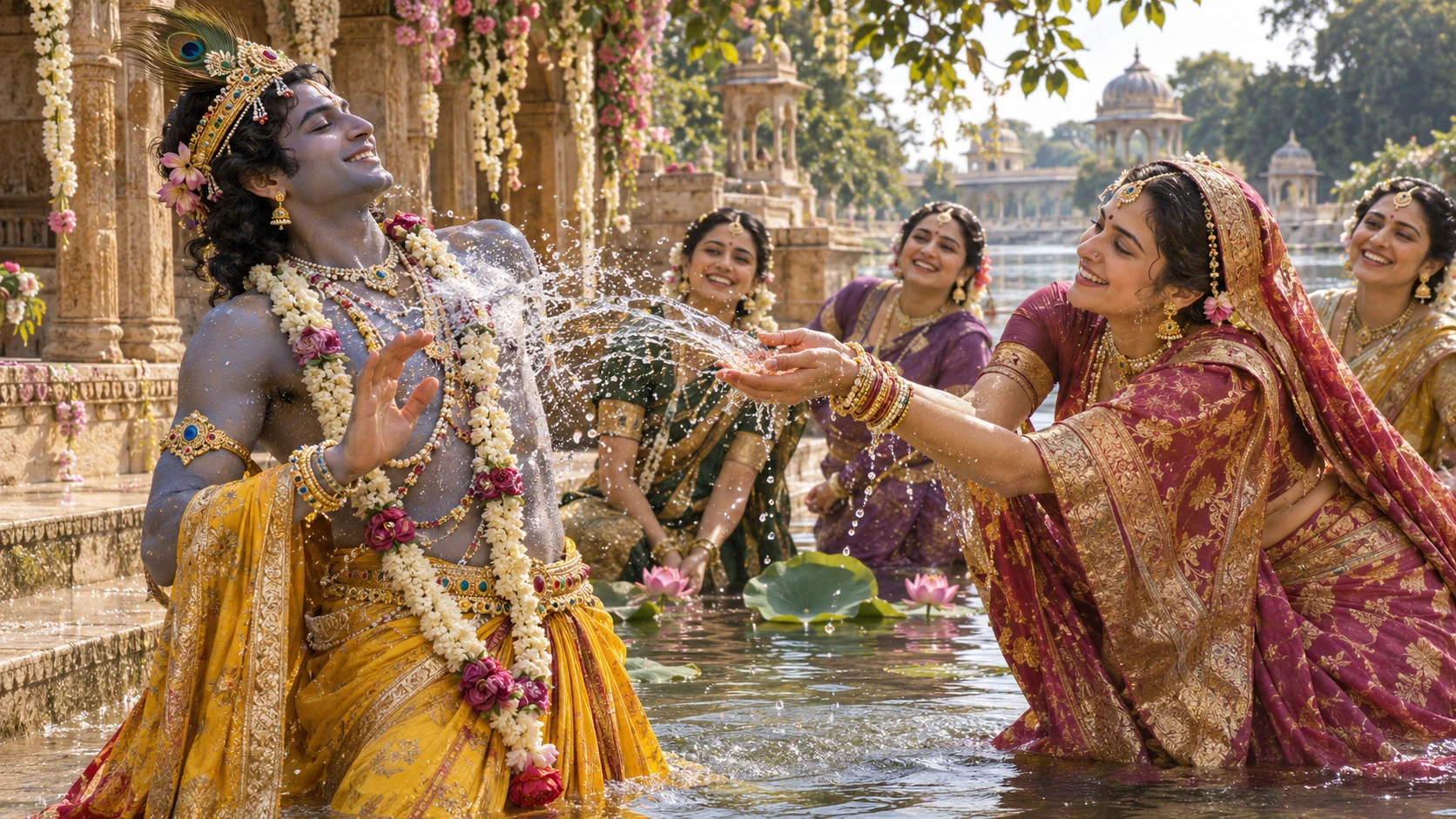
Breathless after the game, the gopis went to Nandimukhi. Krishna had taken their wraps and ornaments in the course of play. Their words came in starts, and wet strands lay across their faces like written letters. As they covered themselves with their arms, the poet saw them as love’s army, with arms as slender as lotus stems.
They asked Nandimukhi why she had invited them to play with someone who had acted unfairly. She called Krishna by the name Giridhari and asked why he had acted as he did. He came smiling. He said he had won and gone to collect the prize. In his version, he had merely smelled golden lotuses with bees circling them and playfully taken a pair of chakravaka birds in his hands.
Nandimukhi replied that the angry gopis themselves bore the evidence for his story in the marks the game had left on them. Krishna told her to doubt their account or at least count his fault as slight if he had not known what he was holding. He carried the joke further. They themselves had told him loudly that he was looking at faces rather than flowers and that the birds, too, were something other than he imagined. Why were they angry now, he asked, if they had not stopped him then?
Nandimukhi broke off the argument. She put the wager aside and asked them to show her how skillfully they could draw sounds from the water. Radha, Krishna, and their companions struck the surface, varying the beats into rhythms fit for dancing. The echoes were so loud at the bank that a flock of chataka birds wheeled around as if they had heard thunder. Madhumangala laughed, kept time, and danced with the peacocks that called beside him.
Bees hummed above the pond. To the poet it sounded as though the trees were praising the music, and the nectar dripping from the blossoms looked like their tears of joy. Radha, Krishna, and their companions finished the game and came ashore. Their attendants were there at once to greet and care for them.