Akrura had reached Vraja and received Krishna and Balarama's welcome. Seated comfortably, he felt his hopes for that journey fulfilled. After the evening meal, Krishna asked about his visit. He inquired after their relatives and Akrura's well-being. Kamsa, He said, had brought suffering upon their family. He remembered the imprisonment of His parents. Their other sons had been killed. Now He asked Akrura to explain why he had come.
Akrura spoke openly about events in Mathura. He described Kamsa's hostility toward the Yadus. He also told of the king's attempt against Vasudeva. He repeated the message he had been sent to deliver. Along with the invitation, he disclosed the purpose behind it. Narada had revealed to Kamsa the truth of Krishna's birth. Krishna and Balarama laughed on hearing Akrura's account. Then They told Nanda what the king had ordered.
Nanda called upon the cowherds to prepare for a journey. They were to gather milk products and gifts. The wagons were to be made ready. The next day they would go to Mathura. There they would bring their offerings and see the great festival. The gopis heard that Akrura had come to take Krishna and Balarama away. The news brought them intense sorrow. Some sighed deeply, and the brightness left their faces.
Others became so absorbed in thinking of Krishna that they stood apart from everything around them. Some remembered the affectionate words He had spoken. His smiles had made those words still dearer. They recalled His graceful movements. They remembered His loving glances and playful remarks. His jokes had so often driven away their sorrow. Now the thought of separation frightened them. With tears on their faces, they gathered in groups and spoke.
They addressed Providence, asking why it joined people in love. Why, they lamented, did it then separate them before that love found fulfillment? They remembered Krishna's face framed by dark curls. Even a trace of His smile could relieve their grief. Now, they said, that face was being hidden from their sight. They spoke bitterly of Akrura's name. Though it meant not cruel, his task seemed cruel to them. He was taking away the sight they loved most.
In their anguish, they feared that Krishna was leaving them behind. They remembered the homes, relatives, and husbands they had set aside for His service. Perhaps, they said, the women of Mathura would now receive His smiles. They imagined those women's happiness on seeing Him enter the city. They wondered whether their own village simplicity would be forgotten. They feared that sweet city conversation might keep Him there. The Yadu families and people along the road would behold Him. For those onlookers, they said, that day would be a festival for the eyes.
The gopis continued their lament about the journey. They could not understand how Akrura could leave them without consolation. Nor did they see the elders preventing the departure. They felt that fate itself had turned against them. They urged one another to approach Madhava and try to keep Him there. What could the family elders do to them, they asked? Even half a moment away from Mukunda seemed unbearable. Their grief overcame their usual reserve.
They remembered the nights of rasa. With Krishna's affection, smiles, glances, and embraces, those nights had passed like moments. How, they asked, could they endure the darkness without Him? They also remembered His return at the end of the day. His companions surrounded Him as He entered Vraja. Dust had settled upon His hair and garland. He played His flute and looked at them with a smile. Weeping aloud, they called Him Govinda, Damodara, and Madhava.
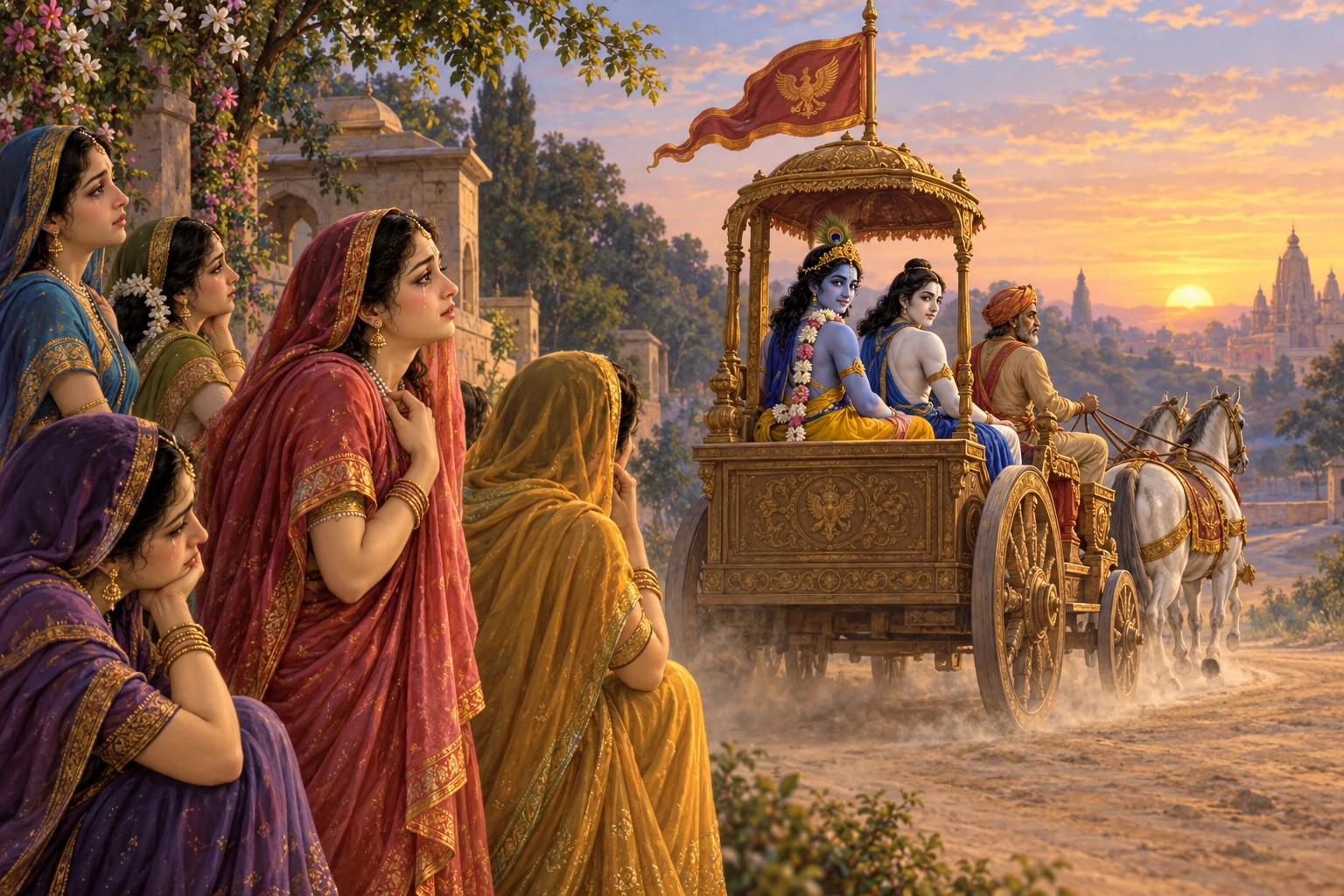
The sun rose while they were still crying. Akrura completed his morning duties and set the chariot in motion. Nanda and the cowherds followed with wagons and their offerings. They carried gifts and pots filled with milk products. The gopis went after their beloved Krishna for a time. He soothed them, and they stopped, waiting for word from Him. Seeing their distress, Krishna sent a loving message through messengers. He promised that He would return.
The gopis remained looking down the road. As long as they could see the banner, they watched. They kept watching while the chariot's dust remained visible. Their stillness was like figures in a painting. At last they turned back. Krishna had not returned with them. Yet they continued to sing of His beloved deeds. Through remembrance and song, they passed their days.