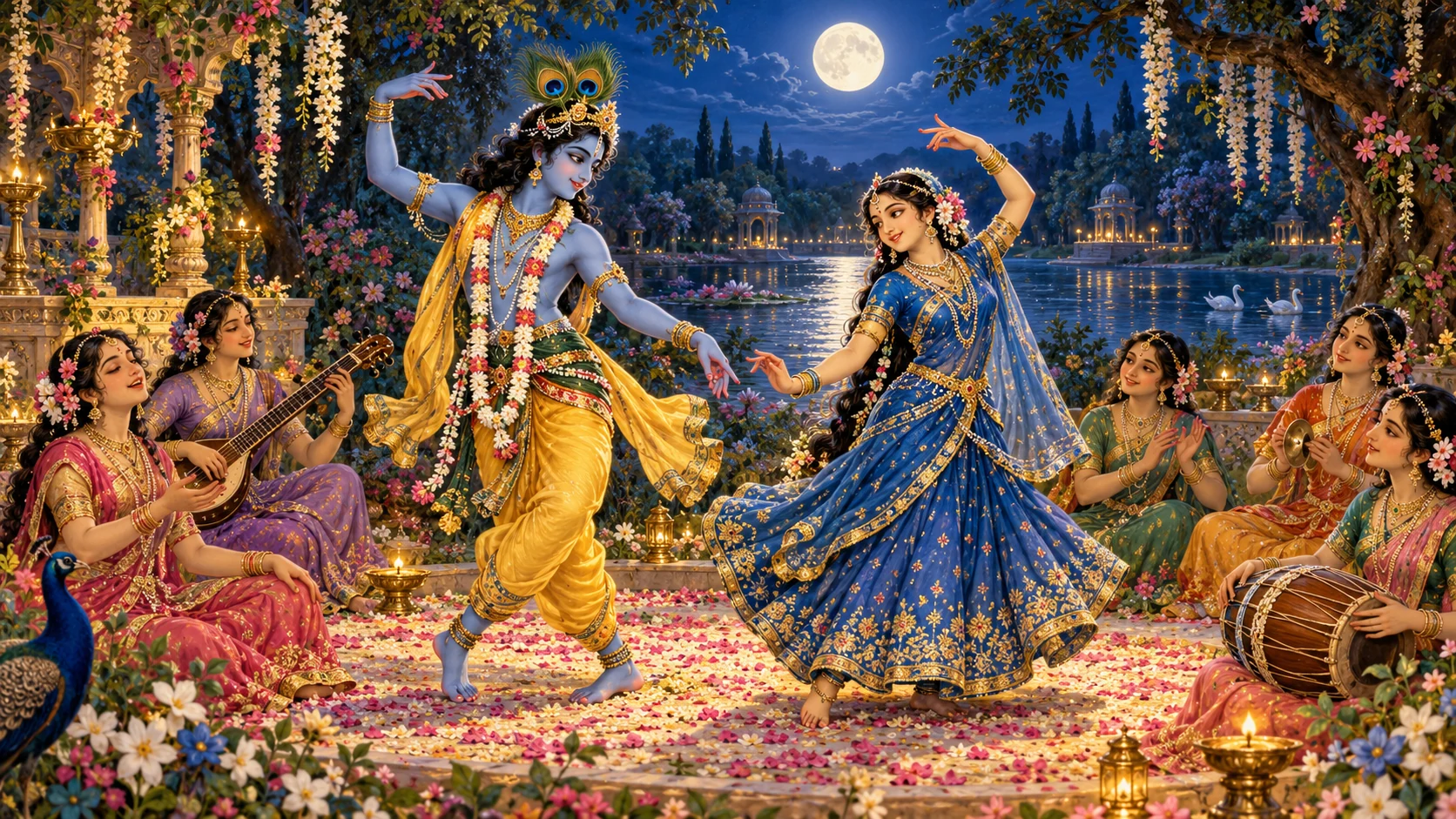
Krishna began varied songs and dances with the gopis. Their performance contained many rhythms. When He danced with Radha, Lalita and the others sang. Chitra and her companions kept the beat. Vrinda and her group were among the audience. Sometimes Krishna danced alone. Then Radha and the sakhis sang difficult, unusual melodies. Sometimes He watched as they danced.
The gopis stood in a line upon the dancing ground. They held vinas and other instruments. They sang different composed songs called prabandhas. Stringed, wind and percussion instruments joined together. Metal instruments also rang. The voices blended with them. Although the sounds were varied, the performance became one. Krishna and the gopis followed them with steps and gestures.
Krishna repeatedly emerged from among the sakhis. He moved His hands and feet with the changing rhythms. As He danced He uttered rhythmic syllables. These formed part of His musical performance. His singing and movement delighted the gopis. The poet recorded the sounds of those intricate patterns. Song was not separate from dance. Both unfolded before the gathered sakhis.
Then Radha danced among them. In the poetic image She was lightning within Krishna's dark cloud. The movements of Her hands made Her bangles ring. Her waist and ankle ornaments chimed as well. She too uttered rhythmic syllables. Again and again She came forward to dance joyfully. The song followed Her movements. Her ornaments became part of the sound.
Lalita emerged from their midst. She moved her hands with their golden bangles. She danced while uttering rhythmic syllables. Then came Vishakha's turn. She played the vina and danced. The sound of her ornaments mingled with the instrument. Mridangas also sounded through the performance. The different participants contributed their own rhythms and movements.
One sakhi sang as she moved her hands and feet. Another continued the sequence of dances. Krishna sang of moonlight making the riverbank dance. In His song the forest also danced with the gentle breeze. Radha answered with a song about His smile. She associated it with the moon, kunda blossoms and a white swan. Milk, diamonds and pearls also appeared in Her comparisons. She sang and danced before Her beloved.
The vina and flute players accompanied the singing. The girls with mridangas also joined the dance. In their absorption, braids and parts of their clothing loosened. Krishna quickly arranged them as He danced. The singers created new patterns of sound from the seven notes. They used both pure and mixed vocal forms. Their songs embraced different artistic traditions. Many sounds again joined in one performance.
The ornaments created another musical layer. Bangles and little bells were like a fifth kind of instrument. Faces sang, hands expressed, and feet marked the beat. Movements of neck and eyes completed the dance. The gopis directed their glances toward Krishna. Some sang ornaments of melody usually accompanied by the vina. Krishna joyfully praised the accomplished singer. When she continued with a still harder passage, He praised her again.
Radha performed the chalikya dance. Krishna was greatly pleased with Her. Finding no better gift, He rewarded Her with an embrace. Then His flute accompanied Her dancing. Radha playfully attributed a rhythmic lapse to Him with a glance. At another moment Her vina and singing directed His dance. Their skill rose so high that the eager sakhis could no longer follow the performance.
The other gopis displayed varied, difficult movements. One knelt and spun with outstretched arms. Another touched the earth with one hand and turned her body. One bent her body like a golden bow. Another sounded or silenced her ankle bells in time. Their skill received praise from the gathering. Krishna led their song and dance, and they led His. The poet compared that joy with a child playing with its own reflections.