In Vraja the word panka is used for fragrant pastes of musk, kumkuma and sandalwood. Curvature belongs to the shape of ornaments, and hardness to stone. Rajas is the dust of flowers, tamas the darkness of night and dvandva a pair. Slowness belongs to the breeze, and restlessness to the longing to see Hari. Slenderness describes a waist, and low passage the course of water. Sorrow, humility, weariness, bewilderment, sleep and listlessness are feelings through which devotional love shows itself in the poem. The cows there are wish-fulfilling kamadhenu, the trees kalpa-vriksha and the rocks cintamani jewels. The poet wonders how such abundance could ever be described.
The Vedas, pictured as persons, saw the good fortune of the gopis and followed their way. When Lakshmi beheld their sweetness, she was overcome with wonder. In their pure affection, the people know Krishna as one of their own. These beings who transcend ordinary life look like familiar neighbors, close to one another. The poet sees even apparent faults as part of the people’s rasa with Krishna. Before such love in Nanda’s land, the three modes of nature lose their pride. The Smritis, Itihasas, Puranas and Vedas bear witness to that condition. Those who devote themselves to it experience it as eternal. The poet asks why some see the eternal pastimes as passing events. Those who understand them say that this deep secret is disclosed by Krishna’s own will.
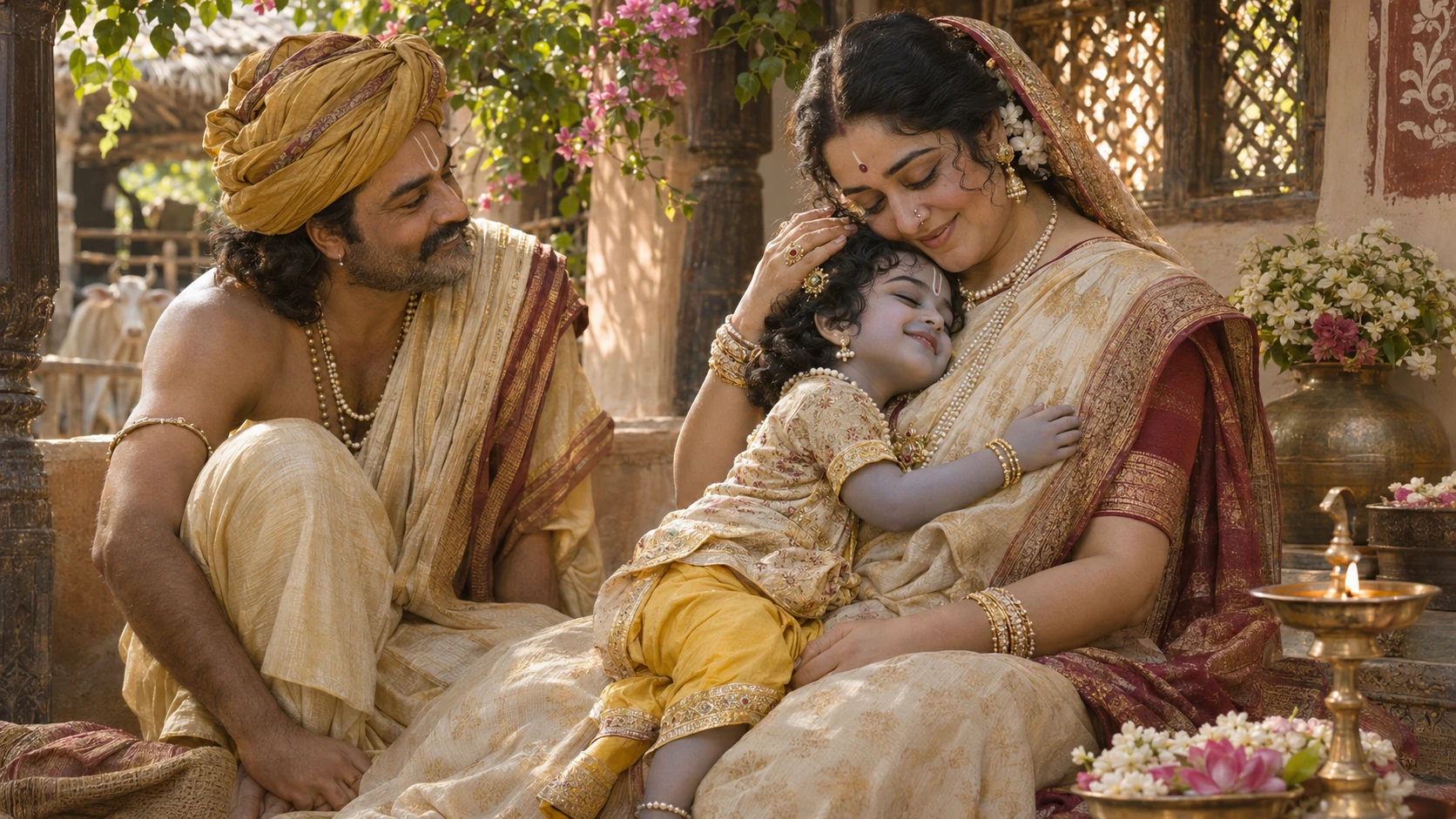
In his capital lives Shri Nanda, the king of Vraja. In him the good fortune of parental love seems to have taken living form. Krishna is his son, and the residents feel that Nanda is their own father. Such is his closeness to all Vraja. In his home is Yashoda, his partner in dharma. The poet sees her as a spiritual vine of parental affection that has borne Krishna as its precious fruit. Yashoda, whose name reminds the poet of renown, once bound Krishna with a rope in her anger. The remembered moment shows the affection that grew between them. Countless cowherd families live across Vraja, some closely and some distantly related to Nanda. All are bound by their affection for Mukunda. The cowherds embody their piety, and their wives devote themselves to service. Among their children grow the friends and beloved companions of Krishna.
Krishna’s friends are His peers in age and His equals in gifts. Forever young like Sanaka and the Kumaras, they give Him their whole hearts. Some are entrusted with especially close service. Subala, Ujjvala and their companions are granted sight of Krishna’s intimate pastimes, as the sakhis are. The radiance from the nails of the lotus feet of Krishna’s beloveds outshines millions of moons. The waves of their good fortune, the poet says, overwhelm even the Vedas. Recalling Shukadeva’s words in the Shrimad Bhagavatam, the poet dwells on the rare favor the gopis received in the rasa dance. That grace remained out of reach even for Lakshmi. Krishna wished to be present with every one of them, even the youngest. He therefore appeared in as many forms as there were gopis of Vraja. Their qualities drew His heart, and He delighted in their company. They in turn were drawn to His qualities and devoted their minds to Him.