← Connected Scenes from Dāna-keli-kaumudī
Dāna-keli-kaumudī · Rūpa Gosvāmin · verses 100–101 · author’s dedication and colophon

Rupa Gosvamin’s Dedication

In his note after the drama ends, Rupa Gosvamin likens the work to a garland for a dear friend and names Nandishvara as the place where he composed it.

Added:

इस कथा का चुनी हुई भाषा में अनुवाद अभी उपलब्ध नहीं है; उपलब्ध पाठ दिखाया जा रहा है।

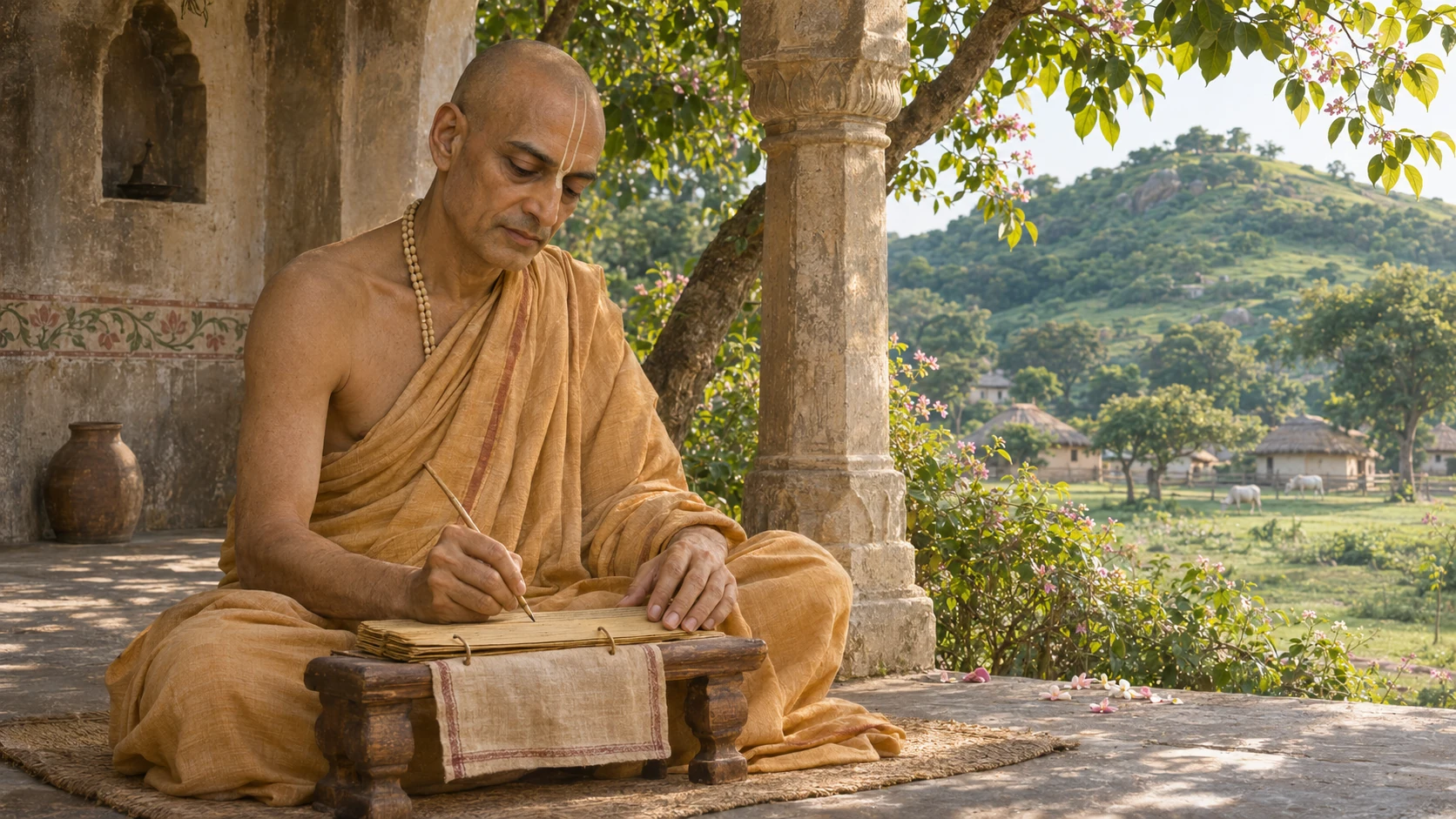
A manuscript and a fresh flower garland in a quiet retreat at Nandishvara.
कथा का कलात्मक चित्रण

After the closing formula of the drama, Rupa Gosvamin adds two verses about the work. In the first, he calls this short play a garland he has strung at the request of a dear friend. He wishes it to bring joy and to adorn that friend’s neck, even for a moment.

In his commentary, Viśvanātha Cakravartin identifies the friend as Raghunatha Dasa, who lived by Radha-kunda. He also explains the double meaning of sumanas. The word can suggest both the flowers of the garland and the devotees who take delight in the work.

The last verse records a year in the Śaka era through words that stand for numbers. In the same verse the author says he composed this short play while living at Nandishvara.

स्रोत: Dāna-keli-kaumudī · Rūpa Gosvāmin · verses 100–101 · author’s dedication and colophon ↗

आगे देखें

चित्र वीडियो ऑडियो
अगलाThe Devotees Gather Beneath Nandishvara
इस पृष्ठ पर अद्वितीय IP पते: —