← Connected Scenes from Dāna-keli-kaumudī
Dāna-keli-kaumudī · Rūpa Gosvāmin · verses 100–101 · author’s dedication and colophon

Rupa Gosvamin’s Dedication

In his note after the drama ends, Rupa Gosvamin likens the work to a garland for a dear friend and names Nandishvara as the place where he composed it.

Added:

Ова прича још није преведена на изабрани језик; приказан је доступан текст.

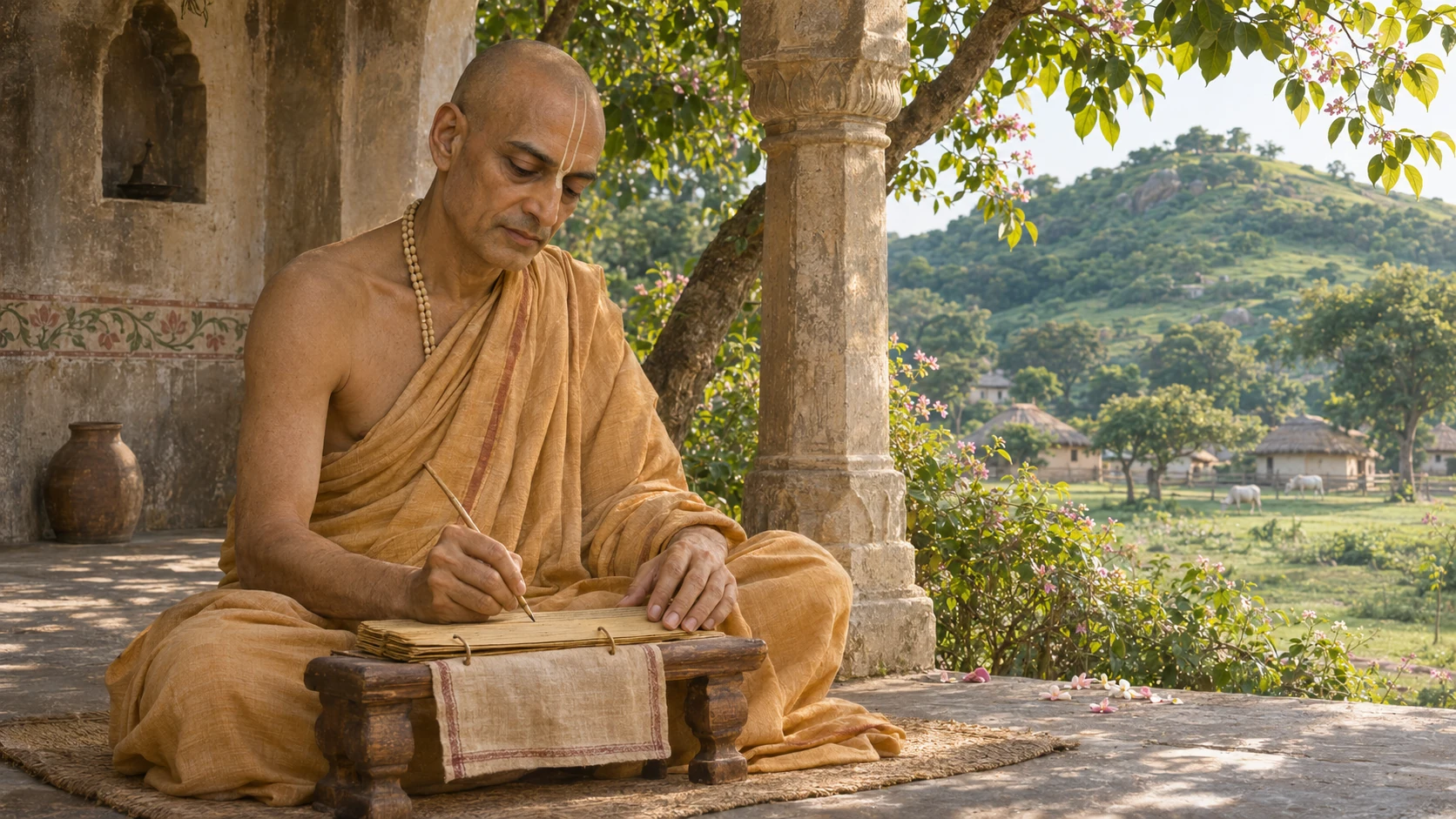
A manuscript and a fresh flower garland in a quiet retreat at Nandishvara.
Уметничка илустрација приче

After the closing formula of the drama, Rupa Gosvamin adds two verses about the work. In the first, he calls this short play a garland he has strung at the request of a dear friend. He wishes it to bring joy and to adorn that friend’s neck, even for a moment.

In his commentary, Viśvanātha Cakravartin identifies the friend as Raghunatha Dasa, who lived by Radha-kunda. He also explains the double meaning of sumanas. The word can suggest both the flowers of the garland and the devotees who take delight in the work.

The last verse records a year in the Śaka era through words that stand for numbers. In the same verse the author says he composed this short play while living at Nandishvara.

Извор: Dāna-keli-kaumudī · Rūpa Gosvāmin · verses 100–101 · author’s dedication and colophon ↗

Истражи даље

Слике Видео-снимци Аудио
ДаљеThe Devotees Gather Beneath Nandishvara
Јединствене IP адресе на овој страници: —