In the loveliest bowers of Vrindavan, Radha and Krishna shine like two lights of ceaseless joy. The poet asks for the cool nectar of their feet to put out the fire of his suffering. A garland of fresh jasmine gleams on Radha’s knot of hair. Her girdle and ankle bells ring while the ornaments on her arms shine. The poet longs to drink in that beauty with his eyes, likening it to golden lotus buds. Radha, her face like an open golden lotus, sits in her beloved’s lap. She seems to sway on high waves of love. The sakhis wonder when they will have the joy of seeing her this way. The poet begs to speak with her in a conversation that is gentle, cooling and full of love. Each word would pour out an ocean of affection, like a shower of nectar on his ears. When someone lovingly speaks Radha’s name, Madhupati sets aside their countless offenses and considers what most precious gift he could give them. The poet wonders how great the mercy must be for those who think continually of service to her. A piece of betel with fresh cloves and camphor comes from the lips of Radha’s beloved. She tastes it with a thrill, and her attendant hopes Radha will tenderly share a taste with her. Radha is a treasury of beauty and of new arts of play. Her sidelong glance flashes like the restless waves of the Kalindi. The poet asks this jewel among the women of Vraja to grant him service.
Dressed in silk the color of safflower, with fresh jasmine in her hair and a softly ringing girdle, Radha looks to him like golden champaka. The poet wishes that light would appear before him. In the circle of the sakhis, Radha and Madhupati dance, and she performs movements of her own making. The attendant longs to offer her fresh betel and gently fan her in the midst of the celebration. Fragrance spreads from Radha, her ornaments shine and her laughter rings. She winds her arms around her beloved’s shoulder in the lovely rasa dance. The poet longs to serve her there. Even a golden lotus filled with the rays of countless moons and fresh nectar could scarcely reach that smile. It might have two darting birds for eyes, but the poet sees a grace in her face that gives him service. Radha’s face rises like a new moon over the ocean of rasa and outshines the moon itself. Hari’s eyes drink its light like two unquenchable chakora birds. The poet hopes to see it too. In every movement of Radha, the poet sees the glory of tender beauty. Her eyes move restlessly, and love and joy flow from her play. He wonders when he may plunge into those waves.
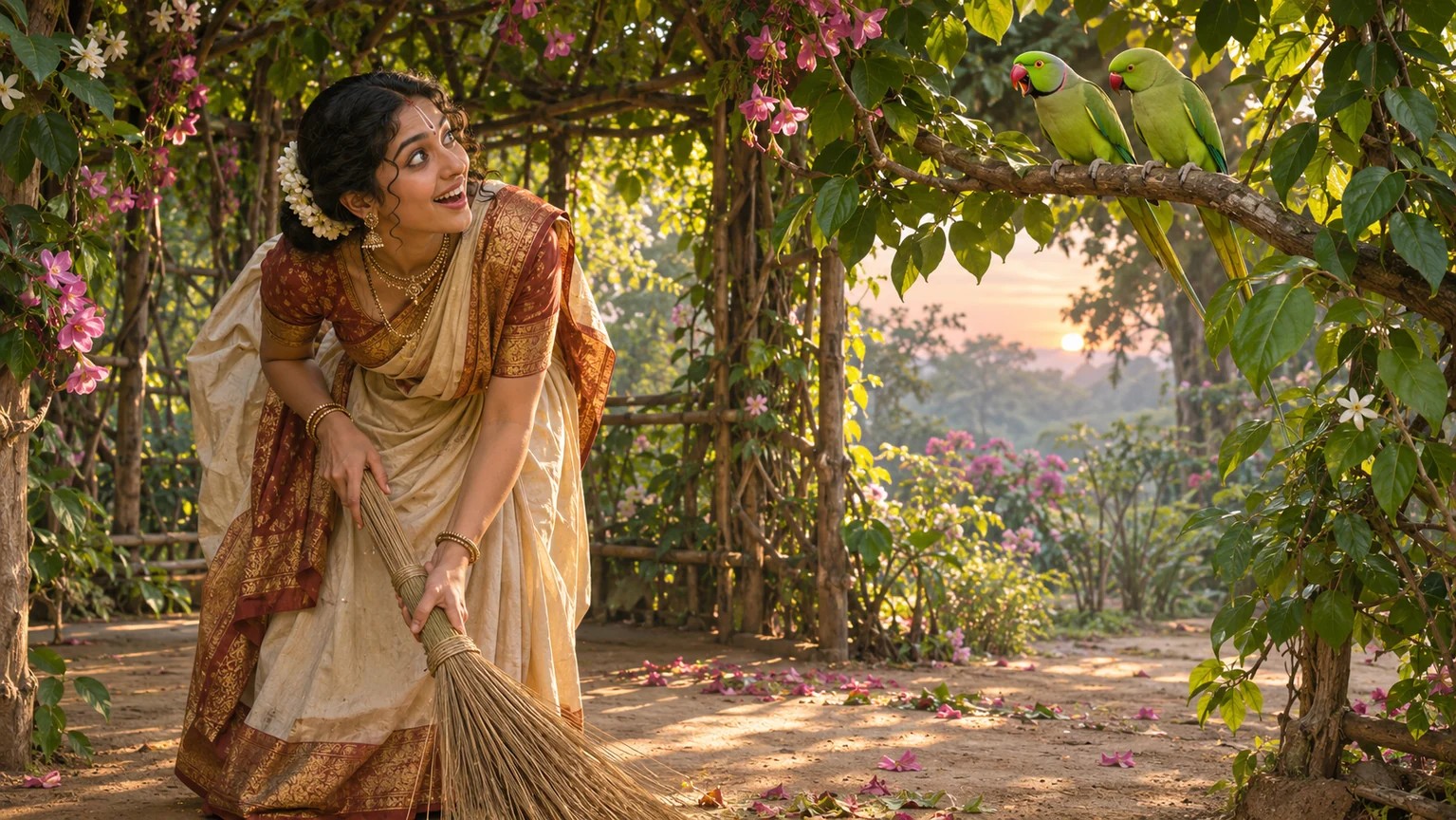
‘Why scratch my neck with the tips of your nails? I am no king of demons. Do not press me so hard, I am not Putana.’ So Radha teases her beloved. The sakhi wonders if, as she sweeps the bower at dawn, the parrots will repeat those words. Awake, dreaming and in the deep stillness of sleep, the poet wants the radiance of Radha’s feet to shine for him. Wherever he may be, he asks that his mind remain in the bower by the Kalindi, borne along by stories of her pastimes. On the porch of the fresh bower beside the Kalindi, Radha and Krishna are weary from play. The touch of cool air closes their eyes. Their attendant longs to fan them. One moment they sing and the next they move on a swing. Then they play with flowers and find new ways of teasing each other. Thus the poet sees them in Vrindavan’s play of love. At the start of night Shyama arrives. He takes Radha by both hands and enters the kadamba grove with her. The poet longs to hear her quiet sighs when they meet upon the couch. Radha hears talk of Yashoda’s son and of the new age of his pastimes. The poet longs to see her when that conversation brings her spontaneous affection to light. One figure in the bower is like golden champaka, the other as dark as a blue cloud. One longs while the other outwardly appears unyielding. When one shows loving pique, the other answers with tender words.